FOOD & CAFÉS
SEOUL GUIDE · SAMSEONG · WELLNESS DINING
Ansic Restaurant, Samseong Station: A Doctor’s Food Therapy Kitchen
It isn’t easy to categorize. Part clinical precision, part quiet dining room — built around the idea that a meal can also be a form of rest.
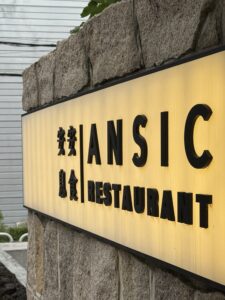
Some days, even a meal feels like one more task to get through. Near Samseong Station, there’s a restaurant built around a different premise — that a meal should also be a kind of rest. Its name is Ansic (安息), a word that combines the Korean characters for “food” and “rest.” Not a slogan. An actual operating principle.
01
The Doctor Behind Ansic
What separates Ansic from most “healthy” restaurants in Seoul is who built it. Not a chef — a physician. Dr. Lee Ki-ho is a board-certified family medicine specialist who has spent much of his career researching food therapy: treating and managing conditions through diet rather than medication.
His academic background runs deeper than a single title. He completed a master’s at Seoul National University’s Graduate School of Medicine and doctoral coursework in aging science at Yonsei University, with a research focus spanning biochemistry, nutrigenomics, and molecular biology. He has held posts as Director of the Chaum Food Therapy Center, Head Professor at CHA University’s Graduate School of Integrative Medicine (Department of Food Therapy), Associate Professor in the Department of Food Bioengineering, and Professor of Family Medicine at CHA University. In 2015, he founded the Korean Food Therapy Association.
Why Would a Doctor Run a Restaurant?
By his own account, Dr. Lee kept running into the same wall in clinical practice: patients wanted to know what to eat, and medical training gave him almost nothing to offer beyond “don’t eat that.” Food therapy was his answer — and Ansic is where the theory becomes an actual plate.
Ansic doesn’t sell restraint. It sells food that won’t work against you.
02
The Space — One Building, Three Purposes
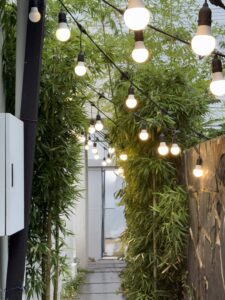
Ansic occupies the ground floor of a three-story building, and the two floors above it aren’t unrelated add-ons — they’re the rest of the same idea. The second floor holds Subun (水分), a tea-prescription café run on the same logic as the restaurant below it. The third floor is Dr. Lee’s clinic, Plate Clinic, where patients undergo genetic and nutritional testing before being told what to eat — and can walk downstairs to actually eat it.
The kitchen itself reflects the same philosophy: it’s led by a nutritionist rather than a traditionally trained chef, which shows up less in flavor than in restraint. Balanced nutrition, no butter, minimal flour. Nothing on the menu is trying to overwhelm the palate — it’s trying not to work against your body afterward.
03
Who It’s For — and Who It Isn’t
If portion size or value-for-money is the priority, Ansic will likely disappoint. Seasoning is restrained by design, and diners looking for a bold, salty, satisfying hit may prefer somewhere else in the neighborhood.
It works better for a different kind of occasion: a quiet space near Samseong Station, a meal built around ingredient quality rather than volume, a calm setting for a date, or a table you can bring parents to without worrying about anything too heavy or too spicy. In short — this is a restaurant for people who prioritize “calm and healthy” over “large and intense.”
04
The Menu & Prices
The menu changes seasonally, so treat the dishes and prices below as a snapshot rather than a fixed offering. Names and prices below are pulled from Ansic’s listing on CatchTable Global. USD conversions use ₩1,400 per $1 for reference.
Representative Menu
| Dish | KRW | USD |
|---|---|---|
| K-Bibimbap | ₩24,000 | $17.14 |
| All the World’s Mushroom Salads | ₩26,000 | $18.57 |
| Cheongdam Princess Muk Stir-Fried Rice Cake | ₩29,000 | $20.71 |
| Cheese-Loaded Eggplant Pizza | ₩29,000 | $20.71 |
| Crispy Chicken Roast with Soft Couscous | ₩39,000 | $27.86 |
A naming note: Cheongdam is a district in Seoul where the restaurant is located. You can understand it as meaning ‘Tteokbokki enjoyed by the princesses of Cheongdam.’ It seems to convey the idea of upgrading traditional street-style tteokbokki (Korean stir-fried rice cake).
Main Dish
| Dish | KRW | USD |
|---|---|---|
| Strip Loin Steak with Grilled Vegetables | ₩57,000 | $40.71 |
| Turmeric Seafood Scorched Rice Soup | ₩58,000 | $41.43 |
| Tomato Beef Endive Wrap | ₩42,000 | $30.00 |
Pasta / Noodles
| Dish | KRW | USD |
|---|---|---|
| Tomato Ragù Pasta with Plenty of Beans | ₩26,000 | $18.57 |
| Cream Pasta with Plenty of Korean Herbs | ₩26,000 | $18.57 |
| Seaweed Cold Noodles | ₩24,000 | $17.14 |
| Abalone Wakame Ongsimi Noodles | ₩24,000 | $17.14 |
| Dried Pollack & Clam Pasta | ₩27,000 | $19.29 |
Rice
| Dish | KRW | USD |
|---|---|---|
| Oat Shrimp Okra Fried Rice | ₩23,000 | $16.43 |
| Barley Miso Fluffy Rice with Lettuce | ₩23,000 | $16.43 |
Side
| Dish | KRW | USD |
|---|---|---|
| Butter Braised Beef in Soy Sauce Rice Ball | ₩7,000 | $5.00 |
| Mini Salad | ₩13,000 | $9.29 |
Note: The full menu is longer than the categories shown above — this is a representative selection. Confirm current dishes and prices via Ansic’s CatchTable Global listing before visiting.
05
What We Tasted
Four dishes from a recent visit, for anyone deciding what to order.
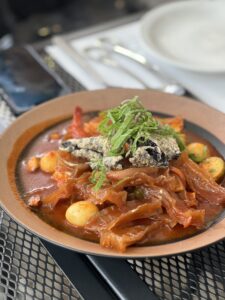
RICE CAKE
Cheongdam Princess Muk Stir-Fried Rice Cake
The ingredients and preparation lean healthy, but the seasoning itself lands close to the tteokbokki flavor most people already know. Nothing about it reads as a health-food substitute.
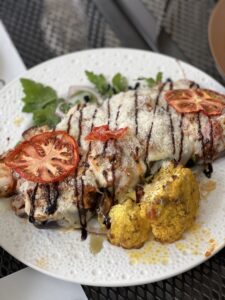
PIZZA
Cheese-Loaded Eggplant Pizza
The eggplant base carries little of the vegetable’s usual strong flavor or aroma, which makes this an easy entry point even for diners who normally avoid eggplant.
HOUSE PICK
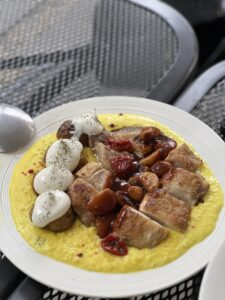
Crispy Chicken Roast with Soft Couscous
The standout of the visit. The chicken is well-rendered — crisp outside, moist inside — and the couscous alongside it makes the plate feel substantial without sitting heavy afterward.
SEASONAL
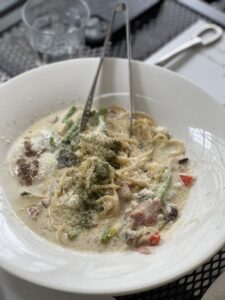
Cream Pasta with Plenty of Korean Herbs
Built around seasonal namul (Korean seasoned herbs), so the composition shifts with what’s available. What arrives on a given visit isn’t guaranteed to repeat.
06
Location & Getting There
Ansic sits near Samseong Station Exit 3, close to the Daechi-dong community service center, at 31 Dogok-ro 99-gil, Gangnam-gu, Seoul.
It’s a bit of a walk from the subway exit — close enough to manage on foot, but a single bus stop from Samseong Station is a reasonable alternative if walking isn’t appealing. Valet parking is available for those driving.
Ansic Restaurant (安息)
31 Dogok-ro 99-gil, Gangnam-gu, Seoul · near Samseong Station Exit 3
07
Hours & Contact
Ansic keeps an unusual schedule on Wednesdays, so it’s worth checking before you plan a visit around that day specifically.
- Wednesday: 11:30 AM – 1:00 PM only
- All other days: 11:30 AM – 9:30 PM
- Break time (all days): 3:00 PM – 5:00 PM
- Phone: 0507-1370-7861
Note: Hours, break time, and the Wednesday schedule can change without notice. Call ahead or check Ansic’s Instagram or official website before visiting, especially if you’re planning around the Wednesday hours or the afternoon break.
08
Booking It
Popular restaurants in Korea are worth booking ahead, and a quiet space like Ansic is no exception. CatchTable is the app that handles most of this — reservations and waitlists for restaurants across Korea in one place. Visitors from abroad should look for the “GLOBAL” version under the app icon, which runs in English and is also where the menu and pricing above are drawn from.
No sponsorship involved — this is simply the app used to book the table.
Ansic isn’t built for everyone, and it doesn’t try to be. For a fast, filling, inexpensive meal, the neighborhood has better options. But for a quiet table where the food is designed not to work against you — built by a doctor who got tired of not having an answer to “what should I eat” — it’s one of the more considered spaces near Samseong Station.
Sources & Notes
- Hanyang University Hospital — “음식을 처방하는 건강 전도사” feature on Dr. Lee Ki-ho and the Ansic / Subun / Plate Clinic building: confirms the three-floor structure, Dr. Lee’s medical background, his genetics/nutrition-based diagnostic approach, and the 2015 founding of the Korean Food Therapy Association.
- Kakao Story (official Chaum Food Therapy channel) — Dr. Lee Ki-ho’s listed titles: Director, Chaum Food Therapy Center; Head Professor, CHA University Graduate School of Integrative Medicine, Department of Food Therapy; Associate Professor, Department of Food Bioengineering; Professor, Department of Family Medicine.
- Kyobo Book author profile — additional academic background: Seoul National University Graduate School of Medicine (master’s), Yonsei University Graduate School (aging science, doctoral coursework), biochemistry/nutrigenomics/molecular biology focus.
- Visit Gangnam (official Gangnam-gu tourism portal) — Ansic listing confirming the “food therapy total cuisine” concept, no butter, minimal flour.
- Menu names and prices: sourced directly from Ansic’s listing on the CatchTable Global app, screenshots captured August 2026. The menu changes seasonally — treat this as a point-in-time reference rather than a permanent price list.
- Tasting notes in “What We Tasted” reflect the author’s own visit and are not sourced from any outside publication.
- Operating hours and phone number: confirmed directly with Ansic Restaurant, August 2026.
- Exchange rate: ₩1,400 per $1 used for all USD conversions above (rounded for calculation, not the exact market rate on the date of writing).
Your Friend in Korea
A Seoul-based business owner writing about this city as a local — not as a traveler. No sponsored content. No paid recommendations.
Paul Cho · Seoul · August 26, 2026