Korea Travel
Seongsu-dong & Ttukseom
Where Attitude Outlives the Space: Je-il in Seongsu-dong
Beyond an old factory sign near Ttukseom Station: a Louis Vuitton City Guide–featured modern Korean bar, seasonal herb pairings, and a founder’s philosophy that outlasts any physical space.
Seongsu-dong is the fastest-changing neighborhood in Seoul. Once a semi-industrial district of handmade shoe workshops, print shops, and small factories, it has transformed into the city’s creative hub, lined with global luxury pop-ups and flagship stores.
Yet if you step away from the busy main strip of Yeonmujang-gil into the quieter alleys near Ttukseom Station, you encounter a very different side of Seongsu. Rather than chasing trends or shouting for attention, one restaurant hides behind a weathered factory signboard and draws people and global brands through nothing more than attitude and restraint: Je-il.
At a Glance
Where
9-9 Wangsimni-ro 10-gil, Seongdong-gu, Seoul (about a 5-minute walk from Ttukseom Station, Exit 7).
Style
Modern Korean fusion bar pairing traditional Korean dishes with seasonal, fine-dining herbs.
Hours
Mon–Sat 6:00 p.m.–11:00 p.m. (Closed Sundays).
Seating
A single long communal wooden table for roughly 20 guests.
Booking Tip
Even on-site QR codes link to Naver; check Naver Map and book via Naver Booking or CatchTable in advance.
01
Behind a Weathered Signboard: An Intentional Space of Restraint
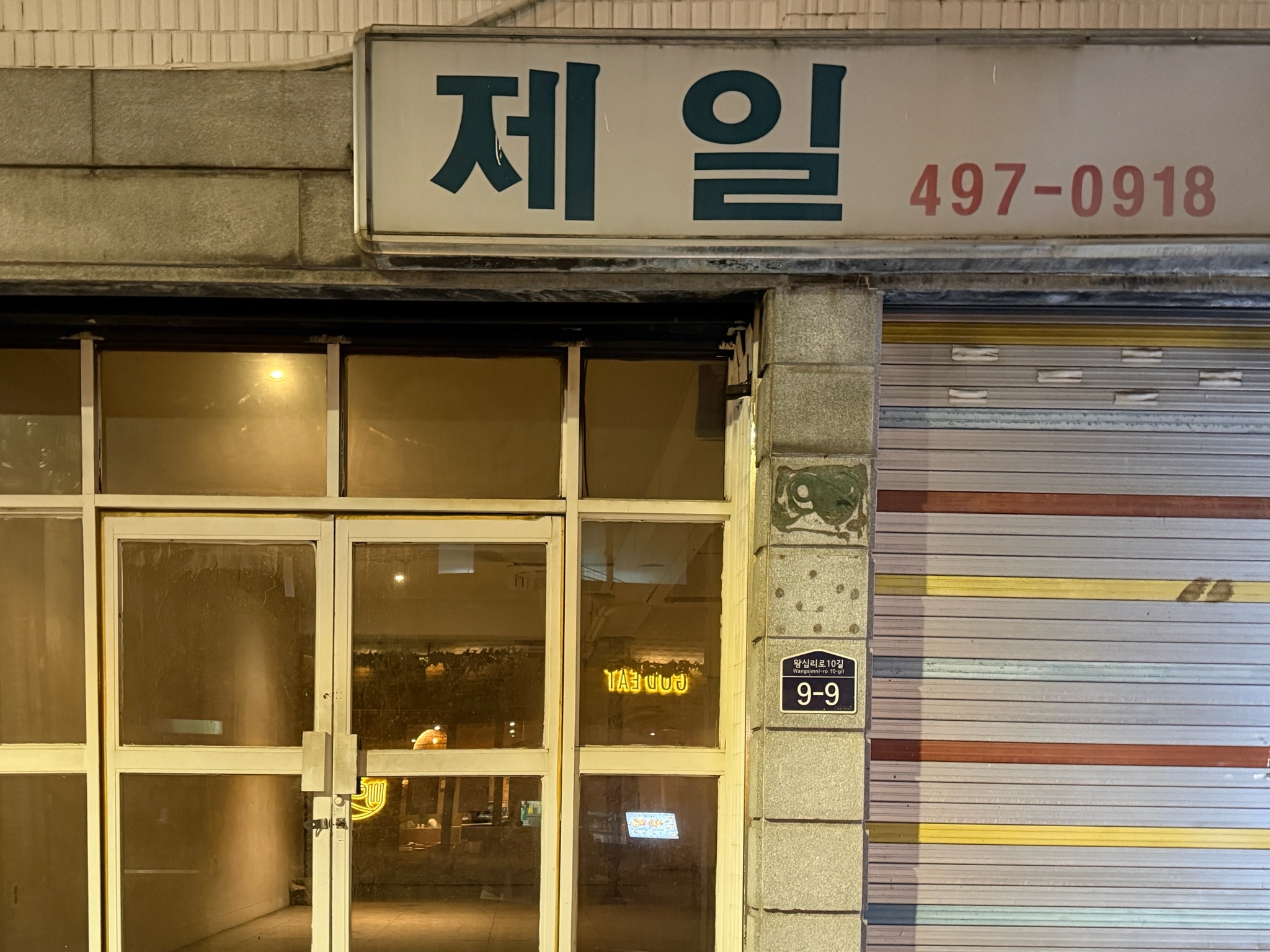
At first glance, the signboard on the alley corner looks exactly like an old print shop or machine workshop: “Je-il 497-0918.” Without a map app, you would rarely guess a restaurant sits behind it. Step through the glass door, however, and the bustle outside disappears into quiet stillness.
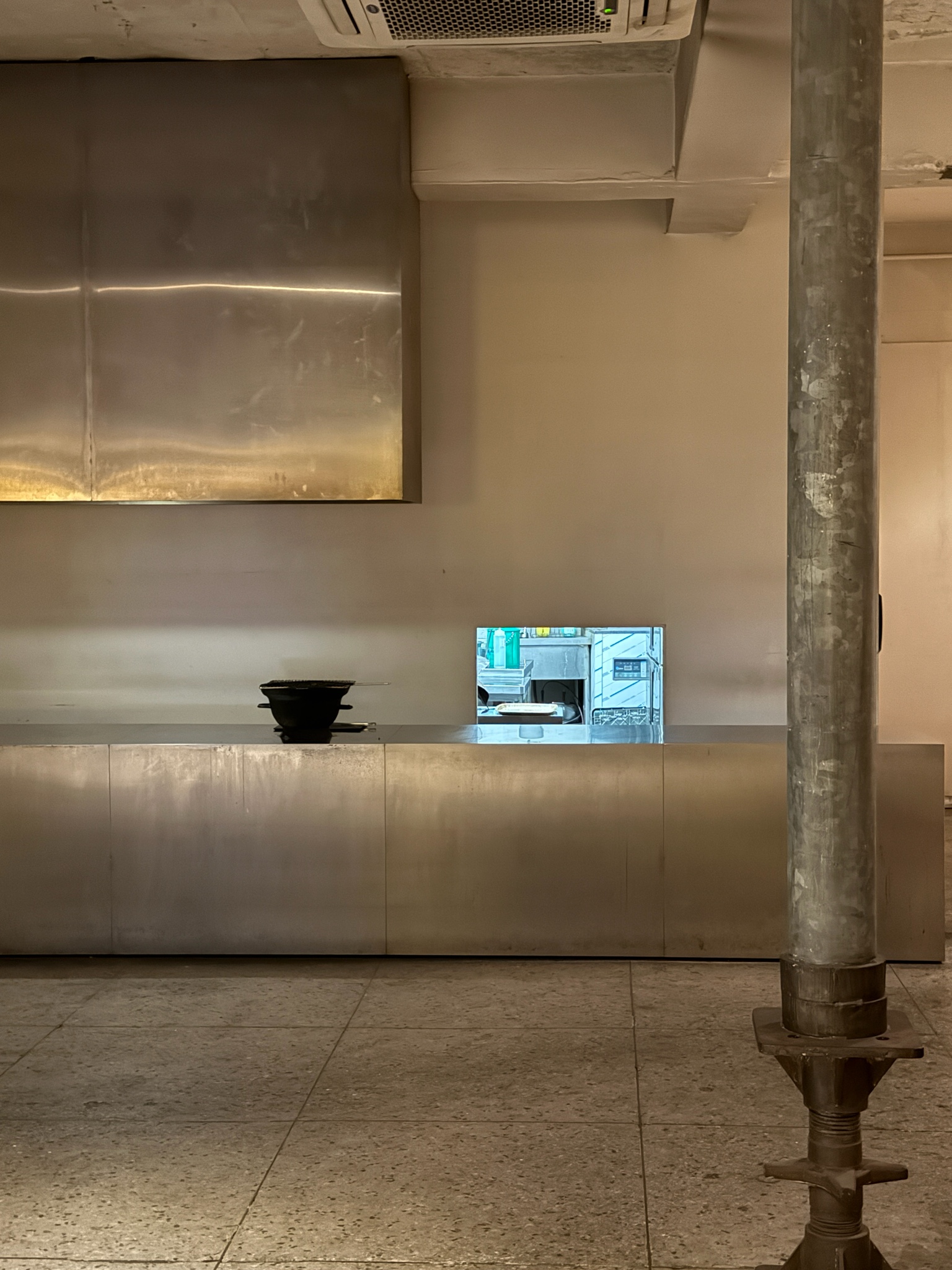
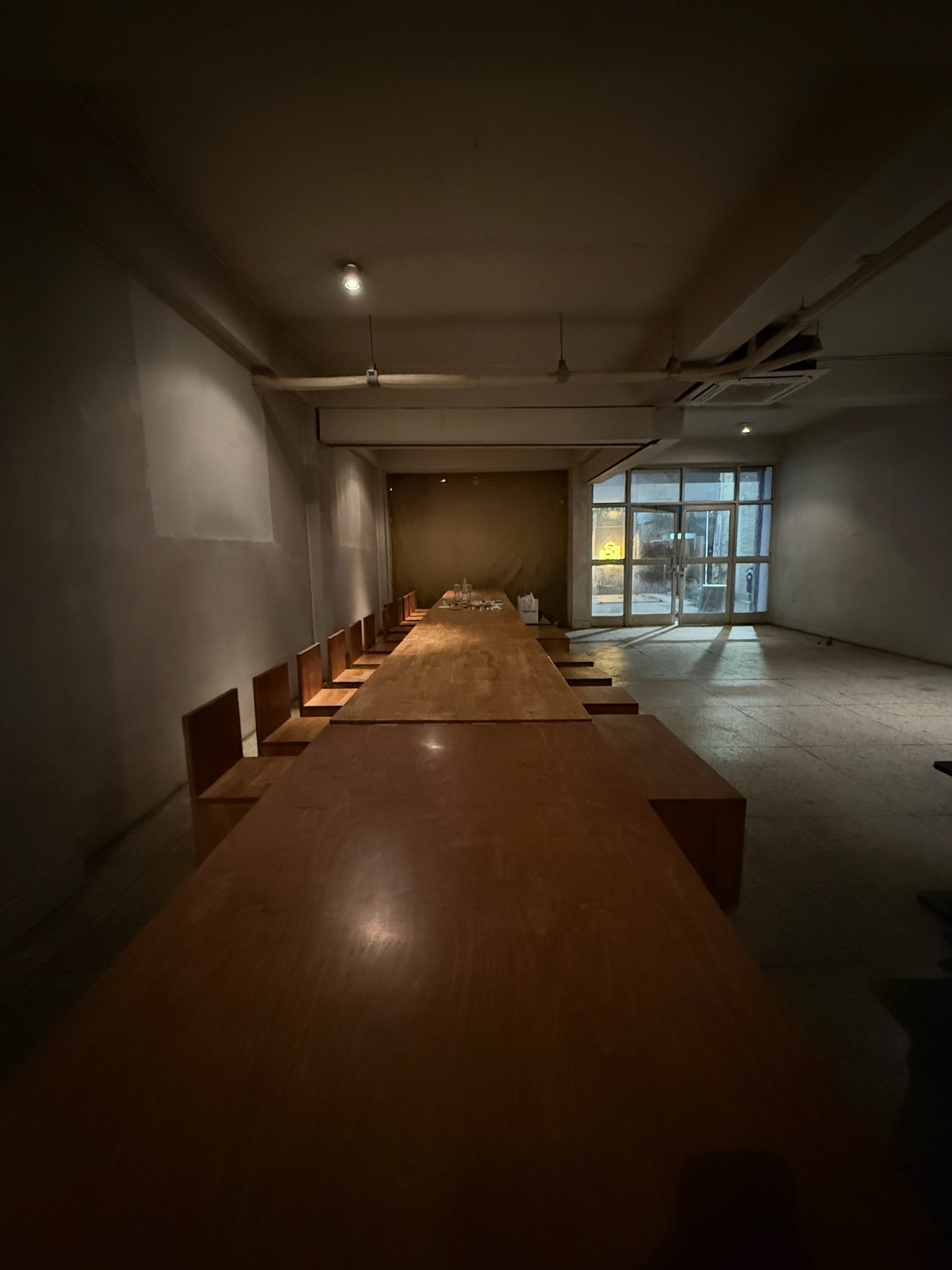
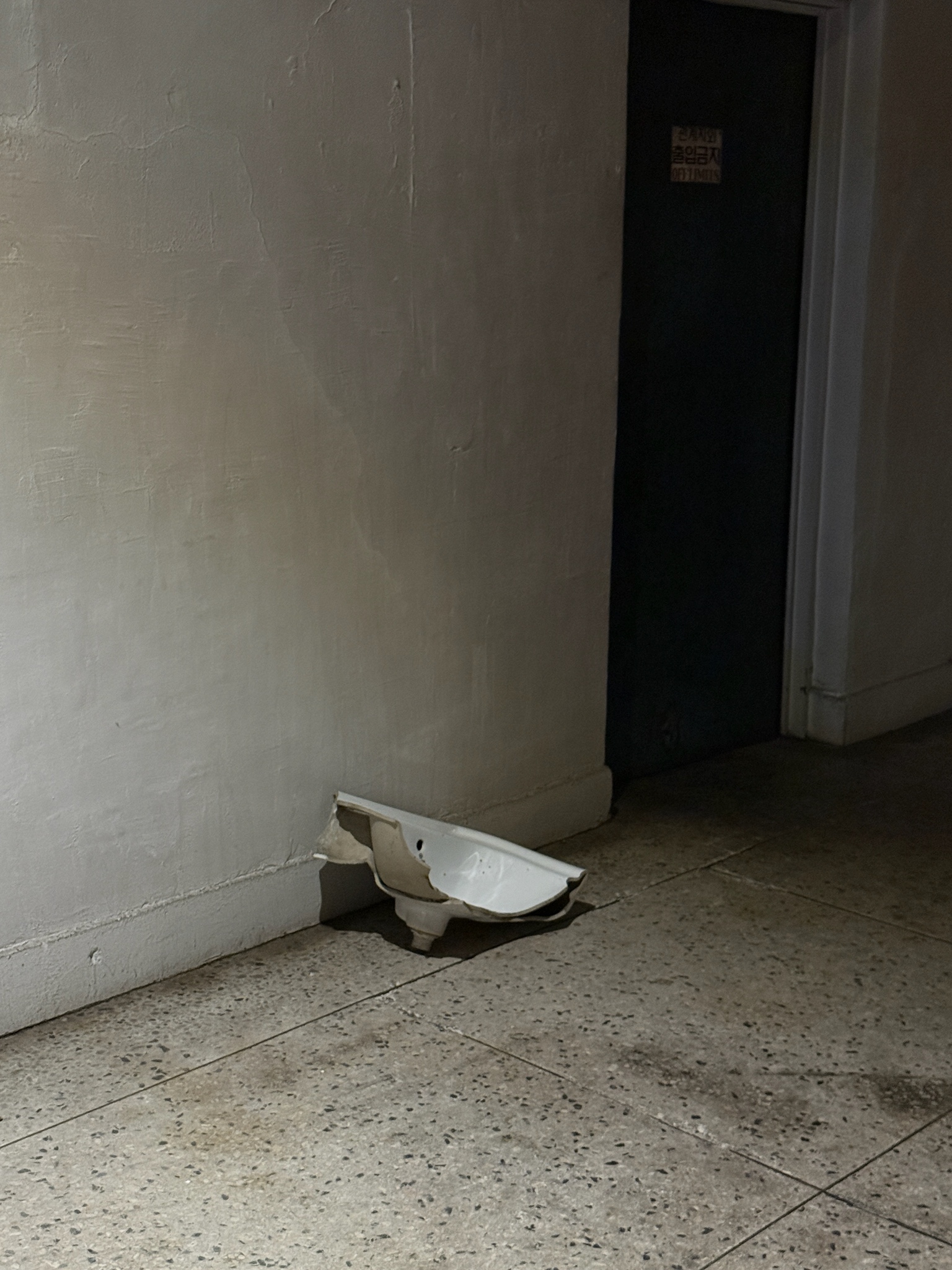
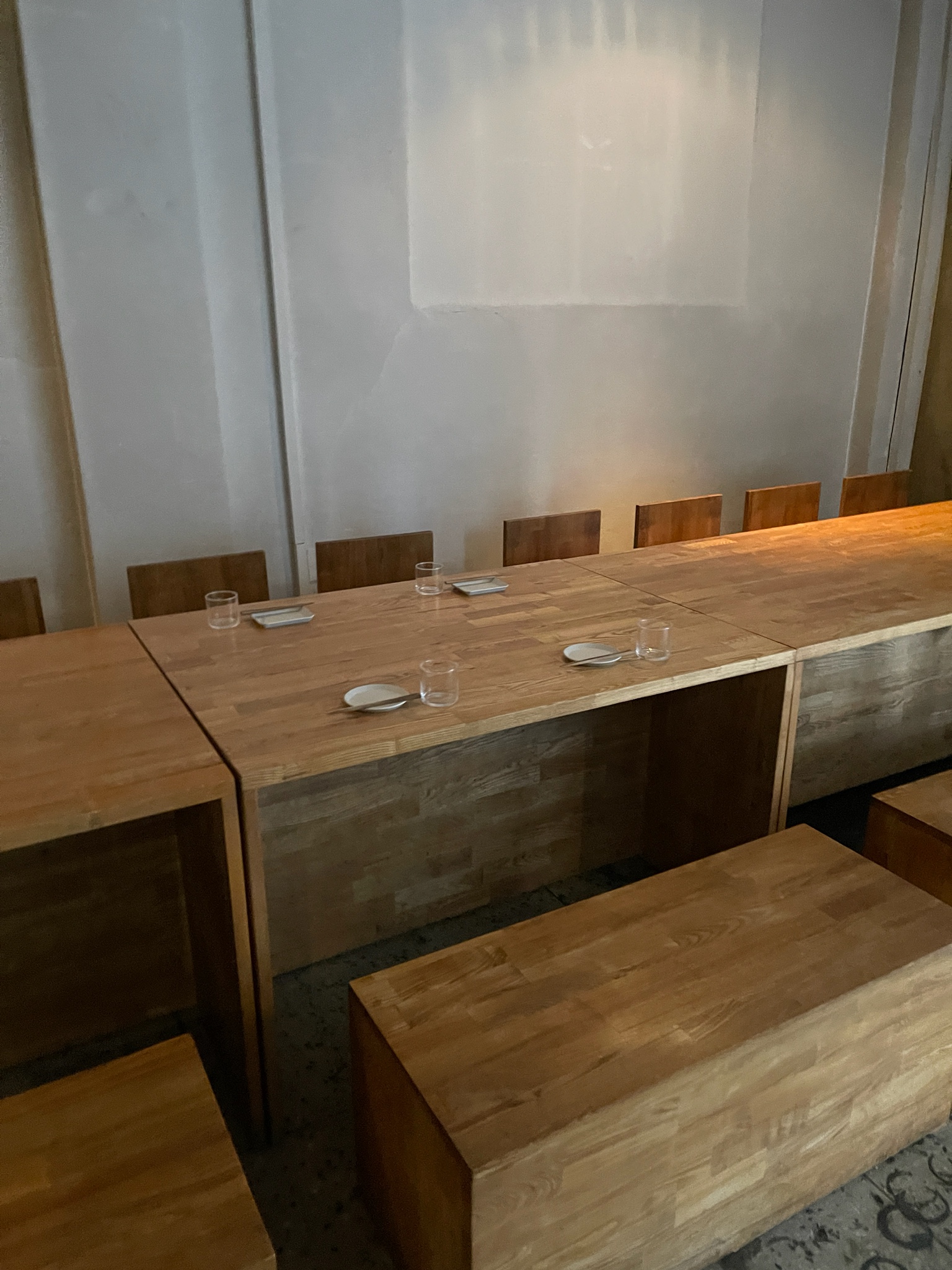
The interior is deliberately sparse. A cool stainless-steel open kitchen holds little more than a dark brazier, while a single long wooden communal table—seating roughly twenty guests—runs down the center of the room. Even a broken ceramic sink resting on the floor by the wall feels less like staged decor and more like a quiet trace of the building’s past.
02
Familiar Korean Flavors, Reimagined Through Fine-Dining Herbs
Je-il’s kitchen builds on traditional Korean foundations while playfully reinterpreting them with herbs and edible leaves more commonly seen in fine dining and Michelin-starred restaurants. Sourcing from a farmer who practices modernized Joseon-era eco-friendly cultivation, the restaurant places herbs at the center of each plate. Rather than mixing everything together under heavy sauces, founder Kim Joo-hwan lets each ingredient’s aroma and texture stand on its own.
For international visitors, Je-il is also a memorable place to experience Hanwoo mungtigi. Unlike yukhoe—Korea’s better-known beef tartare seasoned in advance—mungtigi is a specialty rooted in the Daegu and North Gyeongsang region, made from freshly butchered Hanwoo beef cut into thick, bite-sized chunks. Because its appeal rests entirely on supple texture and clean, deep umami, only ultra-fresh beef makes the cut. Pairing that classic Korean dish with a fine-dining herb like fennel captures Je-il’s signature touch.
03
An Evening for Two Couples: Four Dishes and the Memory of Herbs
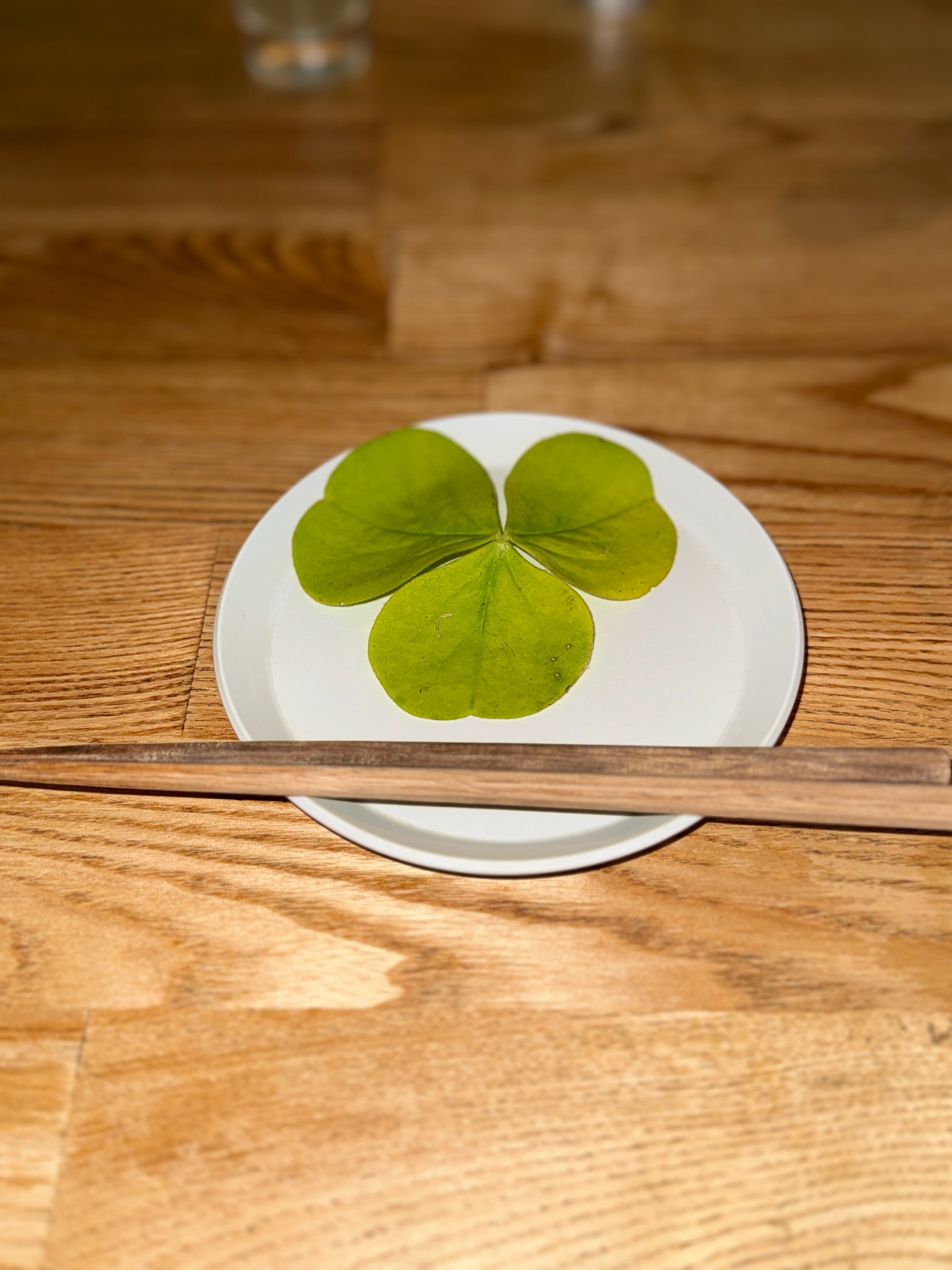
Two couples—four of us in total—sat down together for dinner. As soon as we took our seats, a single green wood sorrel (sarangcho) leaf arrived on a small white plate. Reminiscent of a Michelin-style palate opener, its gentle acidity—paired with a Korean flower meaning “I will never abandon you”—offered a quiet, thoughtful opening note.
That evening we ordered four dishes: Fennel (Hanwoo Mungtigi), Hanwoo Sogui, Perilla Leaf (Deulkkae-ip), and Begonia.
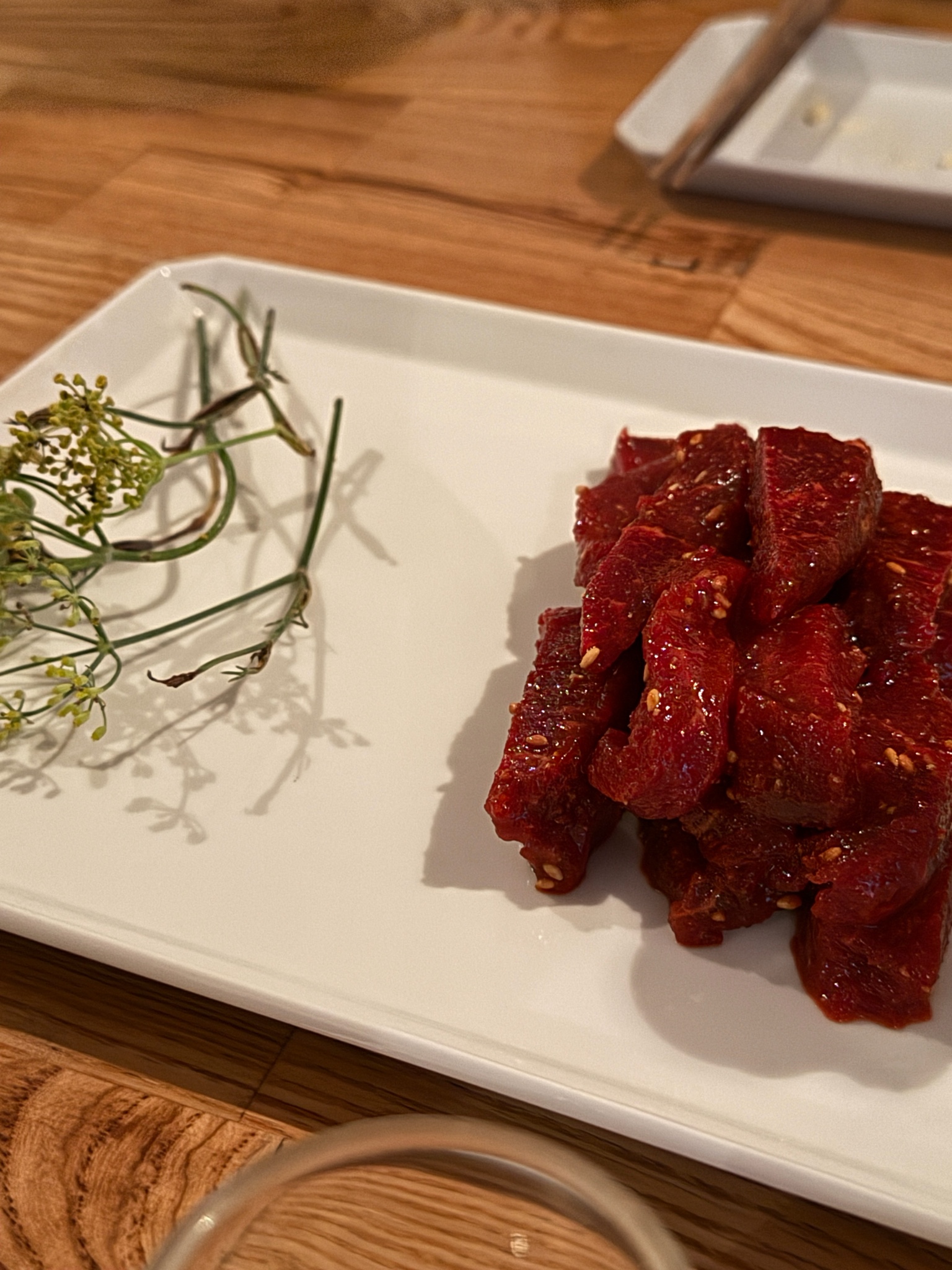
- Fennel (Hanwoo Mungtigi): Deep crimson slices of fresh Hanwoo beef paired with aromatic fennel. The crisp herbal lift kept the rich beef remarkably clean on the palate.
- Hanwoo Sogui: While most Korean grilled beef emphasizes heavy marbling and melt-in-your-mouth softness, Je-il’s version stood out for its light soy-style seasoning, sustained chewy texture, and thoughtful harmony with the accompanying leaves.
- Perilla Leaf (Deulkkae-ip): A striking tofu dish combining silky tofu with crisp, crunchy crystals of texture and bold jeotgal (traditional fermented salted seafood), balanced by fresh herbs. It felt like an inventive reimagining of classic Korean tofu and kimchi—intense, savory, and unexpectedly cohesive.
- Begonia: A remarkably clean, composed noodle dish that felt like enjoying refined noodles alongside delicate Korean banchan-style accompaniments.
I intentionally shared only one dish photo here—to avoid spoiling the surprise of the remaining plates, which are best discovered in person.
What stood out most was how each dish’s accompanying herb or edible leaf gave familiar Korean ingredients an entirely new dimension. Rather than standard mass-market soju, the drink list centers on Korean traditional liquors, introduced calmly by the owner himself.
04
“When I Changed My Attitude, the People I Met Changed Too”
As memorable as the food was, the evening was truly defined by our conversation with founder Kim Joo-hwan.
Originally trained and active in acting, Kim opened Je-il in 2017 hoping to meet people of a different wavelength than those in his previous career. His approach was neither flashy marketing nor expensive decor—it was simply posture and attitude. As he began approaching his space, his guests, and every ingredient with a quieter, more deliberate standard, he found that guests who carried that same care in their own work and lives naturally began to seek him out.
That quiet consistency eventually earned Je-il a place in the Louis Vuitton City Guide Seoul (after its author visited in person), features in fashion magazines such as Esquire and Arena, and private event bookings from fashion houses and corporate brands. Brands gravitate here not merely for the raw aesthetic, but for the trust built through an unwavering attitude.
05
A Message That Outlasts the Room
After we parted ways that night, a long, personal text message arrived—not a copy-pasted template, but a thoughtful note reflecting the exact conversation we had shared:
“Someday the physical place called Je-il may disappear, but I wonder if the name Je-il—and Kim Joo-hwan, the person painting it—might remain. Building on everything I have learned and chosen so far, I hope to keep creating new things beyond food as well.”
It read like a founder’s quiet manifesto: treating one’s name and daily attitude as a brand that endures beyond brick and mortar. As an entrepreneur myself, it was an evening that made me reflect on how I approach my own work.
06
Who This Place Is For
- Travelers looking for an intimate, distinctive Seoul dining experience far removed from crowded tourist spots.
- Food lovers curious about creative Korean fusion that weaves Michelin-style herbs and edible leaves into traditional flavors.
- Entrepreneurs, designers, and creators seeking fresh inspiration from a founder’s philosophy and spatial restraint.
07
Visiting Information, Reservations & Seasonal Tip
Je-il — Seongsu-dong, Seoul
1F, 9-9 Wangsimni-ro 10-gil, Seongdong-gu, Seoul (about a 5-minute walk from Ttukseom Station, Line 2, Exit 7).
Hours: Monday–Saturday, 6:00 p.m.–11:00 p.m. (Closed Sundays). Parking: not available; use a nearby public or paid lot.
→ View on Google Maps · Instagram: @je____il
Naver QR & Booking Tip: Even if you scan the QR code inside the restaurant, it connects directly to Naver. Before heading over, search “Seongsu Je-il” on Naver Map to browse photos and reserve your seat via Naver Booking or CatchTable (certain dishes, such as Hanwoo mungtigi, may require advance confirmation).
A Note on Seasonal Menus: Because Je-il’s menu and herb pairings shift with the seasons and harvests, it is difficult to know the exact lineup before arriving. Instead of trying to plan every dish in advance, go with an open mind and enjoy the anticipation of discovering what is on the table that night.
Sources & Notes
This guide is based on a personal dinner visit as a party of four, direct conversation with founder Kim Joo-hwan, and publicly available details from the restaurant’s Naver Place listing, Esquire Korea, Arena Homme+, and published references to the Louis Vuitton City Guide Seoul. Hours and seasonal dishes may change, so please check Naver or @je____il before visiting.
Paul Cho — Your Man in Korea
Frequently Asked Questions
Where is Je-il located in Seoul, and how do I get there?
Je-il is at 1F, 9-9 Wangsimni-ro 10-gil, Seongdong-gu, Seoul, about a five-minute walk from Ttukseom Station (Line 2), Exit 7.
What are Je-il’s opening hours and closed days?
It is open Monday through Saturday from 6:00 p.m. to 11:00 p.m., and closed every Sunday.
How should international visitors make a reservation?
Reservations are handled through Naver Booking or CatchTable. Even QR codes placed at the restaurant link directly to Naver, so checking Naver Map beforehand is recommended.
Can I check the exact menu before visiting?
Because the dishes and seasonal herbs change frequently with farm harvests, it is hard to verify the full lineup in advance. Visiting with curiosity for the season’s offerings is part of the experience, though specialty items like Hanwoo mungtigi may require advance booking.
How is Hanwoo mungtigi different from yukhoe?
While yukhoe is finely sliced and seasoned like beef tartare, mungtigi features thick, freshly cut chunks of day-butchered Hanwoo beef served unseasoned to highlight its natural chew and deep umami.
Do parties get separate tables?
No. Je-il features a single long communal wooden table seating around twenty guests, creating an intimate, gallery-like shared dining atmosphere.
Why do fashion brands and the Louis Vuitton City Guide feature Je-il?
Beyond its minimalist aesthetic and seasonal herb cuisine, the restaurant was selected for the Louis Vuitton City Guide Seoul and frequently hosts private fashion brand events thanks to the founder’s consistent philosophy and hospitality.